
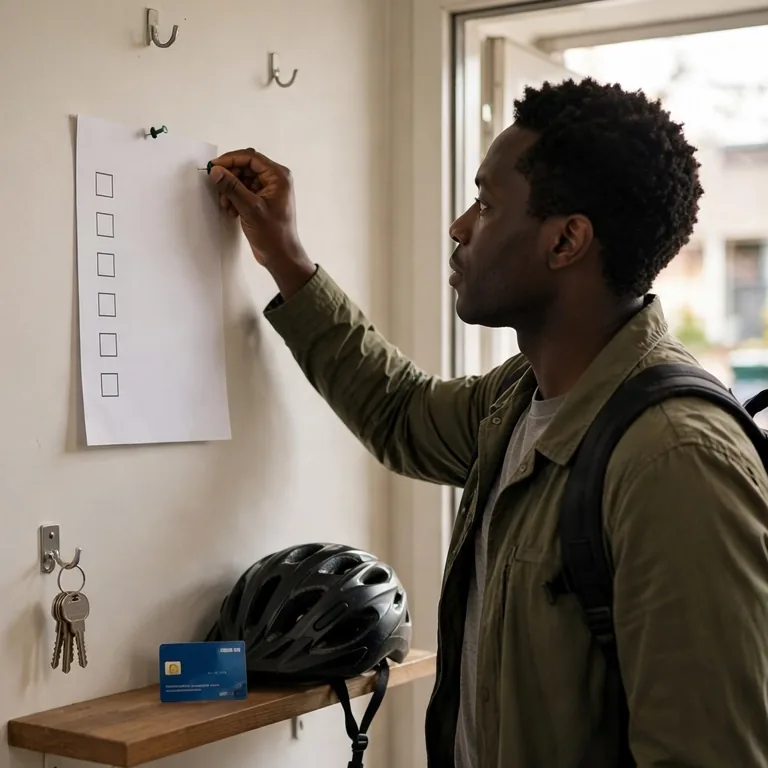
Which tasks do I need to handle during my first 90 days?
Before you travel, verify what your residence and work rights allow. When your stay will be at least four months within a six-month period, you must register with your municipality no later than five days after arriving. Once registered, set up your government login and your banking. As you get settled, locate a general practitioner and care services nearby. Check whether health insurance is required of you as soon as your residence or work begins. If Dutch basic insurance is mandatory, take care of it within four months from the date that obligation starts.
This checklist is meant for people new to the Netherlands who are settling here. If you do not have valid residence status while you wait for a permit you need, or if you are unable to prove who you are, ask the municipality when you should register.
Ahead of arrival: residence, work, and paperwork
Before traveling or beginning a job, confirm your residence and work rights. People who are citizens of the EU (European Union), the EEA (European Economic Area), or Switzerland do not need a residence permit. Third-country nationals are those who do not hold any of those nationalities.
When a permit is required, follow the decision in your IND (Immigratie- en Naturalisatiedienst, Immigration and Naturalisation Service). The appointment and the documents you must provide are determined by your gemeente (municipality). Before you leave, carry out these three checks:
Wide tables can be moved sideways by scrolling.
| Action | Applies to | Deadline or condition | Reason and next link |
|---|---|---|---|
| Confirm residence and work rights | Everyone; especially third-country nationals | Before travel and before starting work | Your route decides whether you need a permit or sponsor and which work conditions apply. Use the Dutch residence-permits overview and work-rights guide. |
| Book the gemeente appointment | Anyone staying at least four months in six months | Book before travel. Registration is normally due within five days of arrival; residence-status and identity exceptions are explained above and below. | Appointments can have long waits. Use the BSN (burgerservicenummer, citizen service number) and municipality-registration guide. |
| Collect registration documents | Everyone registering, including partner and children | Before leaving the country that issued them | The municipality may ask for birth, marriage and address documents. Check translations and legalisation in the documents-before-moving guide. |
Days 1 to 5: registering with the municipality
There are exceptions to the five-day deadline. If you do not have valid residence status and are waiting for a residence permit you need, registration can happen later. If you cannot prove your identity, you may wait until the investigation result is known. Ask the gemeente which situation applies to you. If you are in asylum reception, follow the registration instructions given by the reception service.
For other residents whose stay is at least four months within six months, you must register within five days after arrival. Register in person by taking these steps:
- Make an appointment with the gemeente for the place where you will live. If you can, book it before you travel.
- Gather every document listed by your gemeente. Citizens of the EU, EEA, and Switzerland use a valid passport or identity card. If a residence permit is required, the gemeente may ask as well for your residence document or your IND letter.
- Go to the registration appointment. Any partner and children who moved with you must come too and must bring valid identification.
Registration adds you to the Basisregistratie Personen (BRP, Personal Records Database). If you do not already have a burgerservicenummer, you will be given one. A BSN you already have remains unchanged. How long the processing takes is decided by the municipality.
If your stay will be less than four months and you need a BSN for work or study, use the Registratie Niet-Ingezetenen (RNI, Non-residents Records Database). Citizens of the Netherlands, the EU, the EEA, and Switzerland may choose among 19 RNI desks. Nationals of other countries can register only in Breda or Venlo.
Warning
Do you have no address or no appointment within five days?
Get in touch with the gemeente right away. If you do not have a home address, ask about a briefadres (correspondence address). When no appointments are available, use the common registration problems below.
Once registered: government login, banking, and local care
If a Dutch municipality has registered you as a resident, apply for DigiD (digital government login). A BSN and a mobile phone are required. The activation letter is sent to the address where you are registered.
If your registration was made in the RNI, follow DigiD's application route for nonresidents.
These tasks may be done at the same time. Begin the insurance check as soon as your residence or paid work starts, even when your BSN is delayed.
You can scroll tables that are wide from side to side.
| Action | Applies to | Deadline or condition | Reason and next link |
|---|---|---|---|
| Apply for and activate DigiD | Residents registered with a Dutch municipality who have a BSN and mobile phone | Apply after resident registration; activate before the 21-day code expires | Use the DigiD setup guide. |
| Decide whether Dutch health insurance is compulsory | Anyone living, working or studying in the Netherlands | Check as soon as residence or paid work begins; if required, arrange it within four months | The obligation and start date depend on your situation. Use the health-insurance guide. |
| Open a bank account | Anyone who needs salary payments or Dutch direct debits | The official moving checklist gives no arrival deadline for opening an account. Check the bank's own document requirements and deadlines. | Some banks allow you to provide the BSN later. Check the conditions in the Dutch bank-account guide. |
| Register with a huisarts (general practitioner, GP) | Everyone settling locally | Registration is recommended, rather than compulsory; arrange it before you need care | A huisarts provides primary care and referrals. Use the huisarts guide. |
| Give your BSN and address to the organisation that needs them | Employees, students and parents | Use the employer, institution or school deadline | Employers and schools use the BSN for their records. Check the work, study and family table below. |
Health insurance that fits your situation
Whether you have to take out Dutch basic health insurance depends on your residence, work, and study situation. The SVB (Sociale Verzekeringsbank, Social Insurance Bank) checks if you are insured under the Wlz (Wet langdurige zorg, Long-term Care Act). If the SVB confirms that you have Wlz coverage, then you must take out Dutch health insurance.
Tables that are wide can be scrolled sideways.
| Situation | Action | Deadline or condition | Next link |
|---|---|---|---|
| You live or work under Dutch social-insurance rules | Take out Dutch basic health insurance with cover from the date the obligation starts | As soon as possible; within four months of the duty starting. Ask which start date applies to your residence or work situation. | Check start dates and backdating in the health-insurance guide. |
| You came only to study and do not work | Keep suitable home-country or international cover. Dutch basic insurance is normally not required. If you are not insured under Wlz, you cannot take it out. | Recheck before any paid job, paid volunteering or internship | Work can change your Wlz status. Use the Dutch health-insurance guide. |
| You work for a foreign employer, are posted or work only for an EU institution | Confirm which country's insurance rules cover you | Before buying a Dutch policy | Ask the SVB for an assessment if you are unsure. Use the Dutch health-insurance guide. |
| You are waiting for a residence decision or are in asylum reception | Follow the temporary or reception cover that applies to you | Until you can and must enter Dutch basic insurance | Follow IND or reception instructions. If a residence decision is pending and you receive an uninsured letter, request an SVB assessment. |
If you are not sure which row applies to you, request an assessment.
Paid work or paid volunteering may create an insurance obligation even when studying by itself did not. Check again before you begin any internship as well.
When your policy begins within four months after the obligation starts, your coverage is backdated to that start date. You must also pay premiums for that earlier period.
With qualifying Dutch employment, the obligation begins when the work begins. For an asylum seeker who enters Dutch insurance after a permit decision, the permit start date may apply. Ask your insurer or the SVB which date applies in your case.
As an example, suppose your insurance obligation starts on 1 October 2026. If your policy starts within four months, it covers you from 1 October. You also owe premiums from 1 October. Ask your insurer to confirm the start date for your situation.
If you arrange insurance later than four months, the earlier period is not covered.
If the CAK (Centraal Administratie Kantoor, the office that checks health-insurance coverage) sends you an uninsured letter, follow the instructions in it for your situation:
- If you have cover through Regeling Medische zorg Asielzoekers (RMA, medical care scheme for asylum seekers), tell the CAK.
- If you already hold Dutch basic insurance, ask your insurer to verify that your policy is registered.
- In all other cases, take out Dutch basic insurance if it is required. If you believe the obligation does not apply to you, ask the SVB for an assessment.
Residence documents that match your situation
Find the row for your nationality or permit, and then look at the last row to see whether a tuberculosis test is required. Follow the instructions given in your IND decision.
For wide tables, scrolling sideways is possible.
| Status | Action | Deadline or condition | Next link |
|---|---|---|---|
| EU, EEA or Swiss citizen | Keep proof of nationality and check the free-movement conditions for a stay over three months | No residence permit; usually no IND registration. Resident registration applies at least four months in six months. | Use the residence-permits overview. |
| Family member without EU, EEA or Swiss nationality joining a citizen who qualifies under EU law | Apply for toetsing aan het EU-recht (verification against EU law). | Apply from inside the Netherlands. For a Dutch citizen, this route applies only in specific free-movement situations. Check the IND family-member requirements. | Start with the residence-permits overview. |
| Third-country residence-permit holder | Give biometrie (photo, fingerprints and signature) if requested. IND tells you when your card is ready. Collect it then. Check its dates and work wording. | Use the place and timing in the IND message | For work wording, use the work-rights guide. |
| Permit holder whose application said they would take a tuberculosis (TB) test | Book the test with the GGD (regional public-health service). Take the referral form. | Within three months after receiving the residence permit | Follow the condition in your IND decision; it does not apply to every nationality or permit. |
Citizens of the EU, EEA, and Switzerland normally do not register with IND. There is an exception if IND has previously ended your lawful EU residence. In that situation, check the IND instructions.
Tasks for work, study, school, and inburgering (civic integration)
If you have a child of school age, get in touch with a school while the child's BSN is still pending. Check every row that applies to you.
You can scroll any wide table sideways.
| Situation | Action | Deadline or condition | Next link |
|---|---|---|---|
| Employee | Check the work wording on your permit before starting, then give payroll your BSN | Check work rights before the first workday. Give payroll your BSN as soon as it is available. | Use the work-rights guide. |
| International student | Follow the institution's permit and enrolment instructions; recheck work rights and insurance before a job or paid internship | Follow the institution's deadlines. Recheck work rights and insurance before paid work starts. | Start with the residence-permits overview. |
| Parent with a school-age child | Contact a school and enrol the child; tell the school if the BSN is still pending | Attendance is compulsory from the month after the fifth birthday; contact the school while other paperwork is pending | Use the Dutch-school-system guide. |
| Person who may have to complete inburgering | Read the municipality and DUO (Dienst Uitvoering Onderwijs, the Dutch education service) letters. Act on their dates. | Nationality alone does not decide the duty. The formal notice tells you what applies. | Check who must integrate. |
By day 90: mail, benefits, tax, driving, and address changes
After you activate DigiD, use MijnOverheid (personal government portal). Official letters are kept in its Berichtenbox (digital government mailbox). By day 90, review the tasks below; follow the actual deadline shown, even if it falls earlier or later.
Wide tables may be scrolled sideways.
| Action | Applies to | Deadline or condition | Reason and next link |
|---|---|---|---|
| Activate MijnOverheid and turn on email notifications | Anyone with DigiD | After DigiD activation | Choose which organisations send digital post. Use the MijnOverheid and Berichtenbox guide. |
| Check which benefits you can claim after the relevant policy or household condition starts | People with Dutch insurance, eligible rent or children | A 2026 zorgtoeslag (healthcare benefit) claim is due by 31 December 2027. Kinderopvangtoeslag (childcare benefit) has a shorter window, explained below. | Check income, assets and household conditions in the toeslagen (benefits) overview. |
| Save tax records from both countries | Anyone with income, assets or a move during the tax year | Keep records now; your return must arrive before the date in your tax-return letter | The move-year return has separate questions. Use the income-tax guide for newcomers. |
| Check a foreign driving licence before driving | Anyone who plans to drive | Before driving; validity depends on where the licence was issued | Use the driving-licence exchange guide. |
| Report an address change | Anyone who moves after temporary housing | Report the move from four weeks before until five days after moving | Keep your BRP address current. Use the change-of-address guide. |
Benefits are applied for through Dienst Toeslagen (Benefits Service). For 2026 zorgtoeslag, the usual deadline is 31 December 2027. An extension for filing income tax can give you more time. To avoid losing earlier payments for kinderopvangtoeslag, apply within three months after the month in which childcare begins.
The Belastingdienst (Tax Administration) provides a separate tax return for the year in which you move. For that return, keep records of income and assets from both countries.
Frequent registration problems
If your registration is delayed, your other deadlines do not stop. Find the action below that matches your problem, and keep your appointment confirmations and official letters.
Scrolling sideways works for wide tables.
| Blocker | Action | Reason and next link |
|---|---|---|
| No registrable home address | Ask the gemeente about a briefadres. Use your real living situation. | The gemeente checks whether you qualify. It must arrange a briefadres for eligible people without a host. Use the address-registration problems guide. |
| No appointment inside five days | Book the earliest appointment. Save the confirmation. Ask whether registration can start from the booking date. | The municipality decides whether an earlier registration date is possible. Use the BSN and municipality-registration guide. |
| BSN is delayed | Contact the gemeente. Continue tasks that need no BSN while keeping IND, TB-test and insurance deadlines. | A DigiD application needs a BSN. Keep the other dates in your calendar and use the relevant guide above. |
If you use a briefadres with a private host, bring your own identity document, the host's signed written permission, and the host's identity document or a copy of it. Check the document list from the gemeente. A briefadres cannot be a PO box.
Your registration appointment and deadline checklist
If you have not yet booked your municipal registration, do that first. Mark the rows that apply to your nationality, permit, work, study, and family situation. Add every deadline to your calendar. For registration problems, income tax, and Dutch social norms, use these guides:
- Address registration problems in the Netherlands
- Income tax in the Netherlands for newcomers
- Dutch social norms: visits, shared bills and workplace communication
Official Sources
- NetherlandsWorldwide: Checklist moving to the Netherlands - the official overview of tasks before arrival, immediately after arrival and later
- NetherlandsWorldwide: When to register with a municipality - registration within five days, family attendance, local document requirements and keeping an existing BSN
- NetherlandsWorldwide: Register in the RNI - RNI registration for stays under four months, 19 desks and the nationality rules for choosing a desk
- DigiD: Apply for a DigiD - BSN, registered-address and mobile-phone requirements; the activation letter goes to your registered address
- DigiD: Activate your DigiD - the 21-day activation-code deadline
- IND: Living in the Netherlands - arrival duties for permit holders, including BRP registration, tuberculosis tests and insurance
- IND: Collect a residence document - when and where a residence document can be collected after an IND notice
- IND: Staying as an EU, EEA or Swiss citizen - no-permit free movement and the conditions for stays longer than three months
- Government.nl: Compulsory health insurance after moving - the four-month window, start of coverage and foreign-employer exceptions
- SVB: Studies or internship and Wlz insurance - why student-only stays usually differ and how paid work or an internship can change insurance
- Dienst Toeslagen: Apply for a benefit - BSN and DigiD requirements and the 31 December following-year application deadline
- Rijksoverheid (Dutch central government): Registering at a briefadres - at least four months in six months; correspondence-address eligibility, documents and the municipality’s duty when no host is available
- Rijksoverheid: When to register in the BRP - five-day registration deadline and exceptions for pending residence permission or an identity investigation
- Overheid.nl (Dutch government portal): Wet basisregistratie personen, original publication - original legal basis for the resident-registration threshold and reporting a later address change, articles 2.38 and 2.39
- IND: Wonen in Nederland (Living in the Netherlands) - Dutch source confirming arrival duties and the three-month tuberculosis-test deadline
- IND: Verification against EU law for family members - the required EU-law family application, applying inside the Netherlands and the specific free-movement situations for Dutch citizens
- IND: Requirements that apply to everyone - exceptions to the tuberculosis-test requirement
- IND: Afspraak biometrie (biometrics appointment) - when an IND letter allows a biometrics appointment
- IND: After a positive decision - checking the residence document and work notation when collecting it
- Rijksoverheid: Health insurance when working in the Netherlands - compulsory insurance, the four-month window, residence-only assessments, foreign-employer and EU-institution exceptions
- Overheid.nl: Zorgverzekeringswet (Health Insurance Act), original publication - original legal basis for cover backdated to the insurance-duty date when the policy starts within four months, article 5(5)
- SVB: Working outside the Netherlands - cross-border work and posting can change which country provides social insurance
- Rijksoverheid: Health insurance for asylum seekers - reception cover, temporary alternatives and the permit-start example for backdated cover and premiums
- CAK: Received an uninsured letter - uninsured-letter actions for people with reception cover, existing Dutch insurance, pending residence decisions or an uncertain insurance duty
- Rijksoverheid: Choosing a huisarts - registration is recommended rather than compulsory; insurers can help find a practice
- Rijksoverheid: Primary care - the huisarts provides primary care
- Rijksoverheid: Referrals from a huisarts - a huisarts refers patients when specialist care is medically necessary
- ABN AMRO: Providing a BSN - an example of a bank allowing account opening before a BSN, with its own document deadline
- Rijksoverheid: When a child starts school - compulsory school attendance begins in the month after the fifth birthday
- DUO: Integration in the Netherlands - integration letters, municipal intake and route-specific duties
- MijnOverheid: Government post and personal records - DigiD login and the Berichtenbox for government letters
- NederlandWereldwijd (NetherlandsWorldwide): Using the Berichtenbox - choosing organisations and enabling email notifications for government post
- Dienst Toeslagen: Application deadlines - the following-year deadline, tax-return extensions and the shorter childcare-benefit window
- Belastingdienst: Migration-year tax return - the separate online return or paper aangifteformulier M (migration-year tax return form) for the year of immigration
- Belastingdienst: Tax-return deadline - the return must arrive before the date in the tax-return letter
- RDW (vehicle and driving-licence authority): Driving with a foreign licence - validity depends on issuing country, licence category and dates
- Rijksoverheid: Reporting a move - reporting a move from four weeks before until five days after moving
- GGD: Find your regional public-health service - the directory for finding the GGD responsible for your area
- SVB: Assessment of Wlz insurance - an SVB finding of Wlz insurance requires Dutch health insurance; how to request an assessment
- SVB: Frequently asked questions about Wlz - people without Wlz coverage cannot take out Dutch health insurance; the study-only student exception
- Dienst Toeslagen: Zorgtoeslag - the official name of the contribution toward health-insurance costs
- RMA: Regeling Medische zorg Asielzoekers - the medical care scheme for asylum seekers and its official website
- DigiD: Application route for nonresidents - the RNI application route, including activation-code collection at a service desk or through an eligible video appointment
- IND: Toetsing aan het EU-recht (verification against EU law) - the official Dutch application name and requirements for qualifying family members