
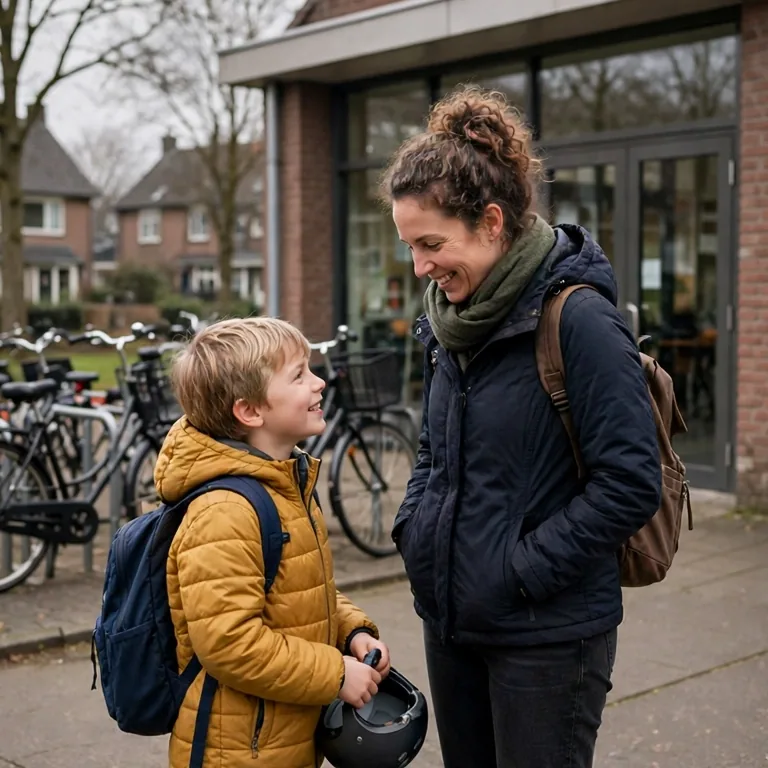
Primary school can begin when your child turns 4
A child may enter basisschool (primary school) at age 4. School attendance is required starting in the month following the child’s fifth birthday. You can apply beginning at age 3, and no later than 10 weeks before the intended start date. When your child knows only a little Dutch, ask the school or the gemeente (municipality) about language support or classes for newcomers. Primary and secondary schools that receive government funding do not charge tuition.
Parents who are selecting a school in the Netherlands or switching schools can use this guide, including families whose residence procedure has not yet been decided. While your child is under 3, compare schools and find out the local admission rules. Once your child is 3, submit a written application and explain any additional support your child requires.
When your child is already living in the Netherlands and is old enough for compulsory schooling, get in touch with your gemeente and with schools that may fit right away. You can contact them even during school holidays or while a residence procedure is still pending. If your child has limited Dutch, that is a reason to ask about language support.
At what age is school attendance required?
Leerplicht (compulsory attendance) covers children who live in the Netherlands, regardless of nationality or residence status. The age rules below are set out in Rijksoverheid (the Dutch central government). Parents have to register their child and ensure the child goes to school. The school year lasts from 1 August through 31 July.
Wide tables can be scrolled sideways.
| Age or stage | School rule | What you do |
|---|---|---|
| Age 4 | A child may attend primary school; most children start then. | Enrol before the start date and ask whether the school offers up to 5 wendagen (settling-in days) from age 3 years and 10 months. |
| From the first day of the month after age 5 | Leerplicht applies. | Make sure your child is registered and attends. |
| Through the school year in which the child turns 16 | Full compulsory attendance continues, unless the child has completed 12 full school years. A skipped primary-school year counts. | Ask the school before any planned absence. |
| Age 16 to 18 without a startkwalificatie (basic school qualification) | Kwalificatieplicht (qualification duty) applies until age 18 or a qualifying diploma: havo (senior general secondary education), vwo (pre-university education), or mbo (secondary vocational education) level 2 or higher. | Keep your child in qualifying education. Check the exemptions below with the school or gemeente. |
The qualification duty does not apply after your child has attended praktijkonderwijs (practical education). It also does not cover pupils who took the arbeidsmarktgericht (work-oriented) route or the dagbesteding (day-activity) route in voortgezet speciaal onderwijs (VSO, special secondary education). There may also be a formal exemption from school registration. Contact your gemeente for information about that separate procedure.
In which situations may your child be absent from school?
Tell the school about illness within 2 days. If your child will miss school for a religious duty, such as a religious festival, inform the school in advance. For a wedding or funeral, request permission from the director beforehand. The director handles requests for 2 to 10 school days. Requests for more than 10 days are decided by the leerplichtambtenaar (school-attendance officer). Other special leave applies to events outside your control that cannot be scheduled at another time.
When a full school week is too tiring for a 5-year-old, you may leave the child at home for as much as 5 hours per week. Tell the director first. If your child needs additional rest, the director can approve up to 5 more hours. This reduced-hours arrangement stops when the child turns 6.
Warning
Check first before you book a holiday that falls outside school breaks
The director can grant holiday leave of up to 10 school days, once in each school year, but only when the type of work you do makes it impossible to take a holiday during any school break. This leave may not be taken in the first 2 weeks after the summer break. Submit your application at least 8 weeks before the trip.
Should you disagree with a decision about holiday leave, send a written objection to the director.
How can you select a school and apply?
Both openbare scholen (public schools) and bijzondere scholen (schools founded on religion, belief or a particular teaching approach) get government funding. Public schools admit children regardless of religion or belief. Capacity limits and local allocation rules may still apply. A bijzondere school may impose admission conditions related to religion or belief only if those conditions are necessary and suitable for carrying out the school’s religious or belief basis. That belief basis must appear in the school’s founding rules. The school’s admission rules must be clear and applied consistently. The public-school distance exception described below also applies.
Montessori, Dalton and Jenaplan are teaching approaches, and vrijeschool (Waldorf school) is also a teaching approach. Public and bijzondere schools alike may use them. A particuliere school (private school) gets no government funding and may charge tuition. Before you apply, complete all four checks:
- Use Scholen op de kaart (Schools on the map) to find schools close to you, and see whether your gemeente has a central application system.
- Go to the school, and read its schoolgids (school guide) and admission rules. The schoolgids also includes the ondersteuningsaanbod (school support offer).
- Ask what support the school provides for children learning Dutch and for children with disabilities or other learning needs. Ask how the school keeps children safe.
- Look at the school’s real holiday calendar, daily schedule, lunch arrangements and voluntary contribution.
When to apply depends on your child’s age, whether you are moving and any support needs. Follow each row that applies to your child.
Wide tables can be scrolled sideways.
| When | Application step | Evidence or detail |
|---|---|---|
| From age 3 | Apply in writing to one or more primary schools. | Follow any municipal preference system. For enrolment, provide your child’s BSN (burgerservicenummer, citizen service number) and a birth certificate, passport or identity document. If your child has no BSN, ask the school to arrange an onderwijsnummer (education number). |
| At least 10 weeks before the fourth birthday | Complete the application if you want the child to start at 4. | Ask for written confirmation and the school’s decision timetable. |
| When changing schools | Tell the old school and apply to the new school. | The new school needs a bewijs van uitschrijving (deregistration certificate) from the old school that is no more than 6 months old. |
| If extra support may be needed | Describe the need in the written application. | Share relevant reports. The written application starts the school’s assessment for passend onderwijs (education matched to your child’s needs) and its zorgplicht (care duty). |
A school can turn down an application if it has no space or if a local allocation rule applies. A bijzondere school may use religion or belief conditions. If no public school lies within a reasonable distance, that school must admit your child even though those conditions exist. It cannot make your child take part in religious or belief-based teaching.
A school may not reject your child simply because you choose not to pay the vrijwillige ouderbijdrage (voluntary parental contribution). A primary or secondary school may not reject your child only because your child needs extra support. If the school cannot provide that support itself, it must work with you to offer a suitable place at another school. Request the refusal in writing. Send an objection by letter or email within 6 weeks of receiving it. The school has to reply within 4 weeks. After that, you can bring the refusal to court.
What is the primary-school admission process in Amsterdam?
Amsterdam has a local allocation system. A preference form is sent around your child’s third birthday. The address where you are registered gives priority at the 8 participating schools closest to you. The city recommends naming at least 5 preferences.
Places are assigned in a central round. If a school has more applicants than places, it may use a lottery. A late application can only be considered for vacancies that remain. If you live in Amsterdam, consult Schoolwijzer Amsterdam (Amsterdam school finder) primary-school procedure. Other municipalities follow their own rules.
What school options exist when your child speaks little Dutch?
Talk with the school and gemeente about your child’s age, earlier education, level of Dutch, support needs and the places that are available. Bring school records from the country your child came from. Compare your child’s situation with the possible routes listed below.
Wide tables can be scrolled sideways.
| Child’s situation | Possible route | Next action |
|---|---|---|
| Primary-school age | Regular primary school with extra Dutch lessons, or a nieuwkomersschool (newcomer school), taalschool (language school) or taalklas (language class). | Ask the gemeente and nearby schools which route serves your address and when the child can start. |
| Age 12 to 18 and new to Dutch | An internationale schakelklas (ISK, international transition class) prepares pupils for regular secondary school or mbo. Other options are regular secondary school with support or a route based on prior schooling. | Use the LOWAN (newcomer-education support organisation) school database and ask the gemeente or school about intake. |
| Older pupil preparing for work or vocational study | An ISK learning route may lead to praktijkonderwijs, regular secondary school or mbo. | Bring school records from the previous country and ask how the destination level will be assessed. |
An ISK route can also prepare a pupil for work or for inburgering (civic integration). If the school proposes integration, look at Who must integrate in the Netherlands? before you choose that route.
A tijdelijke nieuwkomersvoorziening (temporary newcomer provision) is an emergency measure used when the region cannot offer a suitable school place. It is only for newcomers who are of compulsory-school age, speak too little Dutch and have never been registered at a Dutch school. A pupil may remain there for no more than 2 years.
All children living in the Netherlands have a right to education. Under the asylum rules that take effect on 12 June 2026, children who apply for asylum must be able to attend school within 2 months of applying. Contact the COA (Centraal Orgaan opvang asielzoekers, the asylum reception agency) location, the gemeente and a school as soon as you can. Ask who will arrange the school place.
For other tasks after arrival, use first 90 days in the Netherlands checklist. For child health checks, use GGD (regional public-health service) and consultatiebureau (child health clinic) guide.
How is your child’s secondary-school level determined?
During groep 8 (the last year of primary school), the school issues a schooladvies (school advice) based on how your child has developed over several years. Most pupils take the doorstroomtoets (progress test). This test measures language and arithmetic. Pupils cannot pass or fail it.
The school board can grant an exemption to a pupil, but only after talking with the parents, when at least one of the following situations is true:
- The pupil's ontwikkelingsperspectief (education and support plan) says the pupil is expected to follow the work route or the day-activity route in VSO.
- The pupil's IQ (intelligence quotient) is under 75.
- The pupil has spent 4 years or less living in the Netherlands and does not yet have sufficient knowledge of Dutch.
Even if exempt, a pupil can still sit the test when both the parent and the pupil wish to do so. For the 2026–2027 transition, the dates are followed in the order shown.
Wide tables can be scrolled from side to side.
| 2026–2027 date | What happens |
|---|---|
| 10–31 January 2027 | The school gives the voorlopig schooladvies (provisional school advice). |
| 25 January–12 February 2027 | The pupil takes the doorstroomtoets on 1 or 2 half-days, unless an exemption applies. |
| By 24 March 2027 | The school gives the definitief schooladvies (final school advice). |
| 25–31 March 2027 | The central application week runs. In some regions, you may apply earlier, but only after the final advice is available. All applications made before 1 April count as submitted together on 31 March. |
| After the application | The secondary school normally decides within 6 weeks. It must tell you if it postpones the decision and decide by 9 June 2027 at the latest. If special circumstances, such as a move, cause your child to apply after 31 March 2027, the school may offer a second application opportunity. |
At what point is the school required to raise its advice?
When the toetsadvies (test advice) comes out higher than the provisional school advice, the school has to increase the provisional advice to match the test level. The only way it can leave the advice lower is by giving a reason why the higher advice would not serve your child’s interest. Should the provisional advice and the test advice be more than half a level apart, the school is allowed to select a level in between. That choice must come with an explanation. A weaker test result can never bring the provisional advice down.
Take this example: if the provisional advice is havo and the test result is vwo, the usual outcome is a vwo advice. Only when the school explains, based on your child’s interest, can it give havo advice or a combined havo and vwo advice.
Praktijkonderwijs follows its own rule. When the test advice combines praktijkonderwijs with vmbo (pre-vocational secondary education)-bb (basic vocational pathway in pre-vocational secondary education), the school does not have to raise its provisional praktijkonderwijs advice. But if the result combines vmbo-bb and vmbo-kb (middle-management vocational pathway), or is higher, a raise is required unless the school explains that doing so would not be in your child’s interest.
A secondary school is required to place your child at the final advice level or higher. For praktijkonderwijs, an additional toelaatbaarheidsverklaring (admission eligibility declaration) from the samenwerkingsverband (regional school partnership) is also needed. The school cannot use additional admission tests to set your child’s level, and it cannot reject your child because of weak primary-school test results. A special programme, for instance top sport or bilingual education, is allowed to test the particular skill that programme requires. Admission may still be affected by capacity, local allocation, and religion or belief conditions. The distance exception for public schools mentioned above also still applies.
Talking through school advice you do not agree with
Request that the teacher explain the evidence. Talk about records that are missing, Dutch language development, or support needs. If disagreement remains, speak with the director, and after that use the complaints committee listed in the schoolgids.
The Inspectie van het Onderwijs (Education Inspectorate) registers concerns for the checks it carries out on schools. It does not make decisions on individual complaints.
What do the secondary-school routes lead your child toward?
The four routes vary in how long they take and in the education or work for which they prepare your child.
Wide tables can be moved sideways by scrolling.
| Track | Usual length | Main next route |
|---|---|---|
| Praktijkonderwijs | Usually 5 years | Work, or for some pupils mbo. |
| Vmbo | 4 years | Mbo. Vmbo has 4 pathways from more practical to theoretical. |
| Havo | 5 years | Hbo (higher professional education). |
| Vwo | 6 years | University. |
If your child is going into praktijkonderwijs, ask the school how it arranges the toelaatbaarheidsverklaring together with the samenwerkingsverband. School advice on its own does not give admission.
For a vmbo-g/t (mixed or theoretical pathway) diploma, if your child also passes an extra general-education exam subject beyond the required subjects, the law gives your child the right to enter havo 4 with no additional grade conditions. A vocational subject or a school-specific subject does not qualify. If there is no qualifying extra subject, the havo school may set its own conditions. With a havo diploma, the law gives your child the right to enter vwo 5 without extra admission conditions.
Before the transfer, ask the school your child is moving to about subject profiles, any subjects that are missing, and exemptions.
How can you arrange extra support and school transport?
When you apply in writing, tell the school about any extra support needed. Under its zorgplicht, the school has to assess what support it can offer. The school has 6 weeks to make a decision, and it may extend this period one time by no more than 4 weeks.
Should 10 weeks go by with no decision and your child is not enrolled at another school, the school where you applied has to offer a temporary place. If that school cannot provide the support your child needs, it must cooperate with you to find a suitable regular or special school.
Request the support offer, and any ontwikkelingsperspectief, in writing. Talk through disagreements about admission, placement, or support with the school and the samenwerkingsverband. An onderwijsconsulent (education consultant) can provide help. After that, you can contact the Geschillencommissie passend onderwijs (suitable-education disputes committee) about the admission of a pupil who needs extra support, removal from school, or the creation or revision of that pupil’s ontwikkelingsperspectief.
Leerlingenvervoer (pupil transport) is decided separately by the municipality. It may be available when illness, disability, or behavioural problems make independent travel impossible. Sometimes distance from a suitable school can also make a child eligible. In VSO, transport is available only when a disability prevents independent travel. Ask your gemeente about the conditions, and reapply each school year.
What school costs are you required to pay?
At government-funded primary and secondary schools, there is no tuition fee and most learning materials are provided free of charge. Families may still have to pay for personal items, care, and voluntary extras.
For wide tables, you can scroll sideways.
| Cost | What the rule means |
|---|---|
| Tuition | Government-funded primary and secondary schools charge no tuition. Private schools can charge because they receive no government funding. |
| Secondary learning materials | The school provides most books, workbooks and digital licences free of charge. Parents normally buy items such as an atlas, dictionary, calculator and gym clothes. |
| Laptop or tablet | A school may ask you to buy one. If you cannot or do not want to pay, it must provide a full alternative, such as a loan laptop. |
| Vrijwillige ouderbijdrage | Payment is voluntary. You do not have to explain why you do not pay. Your child can join every school-organised extra activity. The school may not give them a replacement activity. The schoolgids states the amount, use, voluntary status and right to take part. The medezeggenschapsraad (participation council) approves the amount and use. |
| Lunch and buitenschoolse opvang (BSO, out-of-school care) | A primary school may charge for lunch supervision. BSO is paid childcare before or after school and on free days or holidays. Kinderopvangtoeslag (childcare benefit) may cover part of the cost. |
An extra activity that is planned may be changed for all pupils or cancelled when the school cannot pay for it. For instance, if you do not pay the voluntary contribution for a school trip, your child may still take part if the trip still goes ahead.
When school costs are too much for your budget, ask your gemeente about the kindpakket (child support package) or other support for children. Conditions vary by locality. Stichting Leergeld (school-cost support foundation) may assist with school supplies, a laptop, a bicycle, sport, or lessons. The Sam& voor alle kinderen (Together for all children) application service joins several support foundations together.
Where can you check your child’s school holidays?
Look at the schoolgids or the school website for the calendar that actually applies. The official 2026–2027 school-holiday overview works with three regions: Noord (North), Midden (Central), and Zuid (South). The autumn and spring dates are advisory, which means schools may pick other dates. A school may add one week to the May break.
Starting 1 August 2026, primary schools that take part in the flexible-times experiment may set holidays outside the government periods. Check every date with your school before you book travel.
How can you challenge a decision made by a school?
Who is responsible and what deadline applies depend on the problem. Use the route below that fits the written decision or complaint you have.
Wide tables can be viewed by scrolling sideways.
| Problem | First route | Deadline or next route |
|---|---|---|
| Written admission refusal | Object to the school board by letter or email. | Submit within 6 weeks of receiving the refusal. The school must respond within 4 weeks. A court route can follow. |
| School advice | Speak to the teacher, then the director. | Use the complaints committee described in the schoolgids if the dispute remains. |
| Admission of a pupil needing extra support; removal from school; establishment or revision of their ontwikkelingsperspectief | Speak to the school and samenwerkingsverband; ask an education consultant for help. | Apply to the Geschillencommissie passend onderwijs within 6 weeks after the dispute starts or the proposed decision. |
| General complaint about school | Start with the person involved or school leadership, then follow the board’s complaint procedure. | The complaints committee must respond within 4 weeks. Its advice is not binding. |
| Psychological or physical violence, including severe bullying, sexual abuse or harassment, discrimination or radicalisation | Contact the vertrouwensinspecteur (confidential inspector). | The Inspectorate can receive a signal but does not decide an individual complaint. |
If you change schools, inform the school your child is leaving. That school removes your child from its register and gives you proof for the new school. Check the allocation rules of the new municipality, the new school’s calendar, and whether you need to apply again for pupil transport.
For child health checks and other tasks after arrival, use these guides:
Official Sources
- Rijksoverheid: compulsory attendance and qualification duty - Compulsory-attendance ages, the qualification duty, startkwalificatie, exemptions, the school year and the duty for every child living in the Netherlands.
- Rijksoverheid: authorised school absence - Authorized absence, illness reporting, special leave and reduced school hours for 5-year-olds.
- Rijksoverheid: holidays outside school breaks - The narrow work-related holiday exception, its 10-day limit, timing, application deadline and objection route.
- Rijksoverheid: primary-school starting age - Starting primary school at 4 and optional settling-in days from 3 years and 10 months.
- Government.nl: registering a child with a primary school - Primary-school enrolment documents, local allocation rules, settling-in days and care duty when extra support is needed.
- Rijksoverheid: types of primary school - Public, special, religious and method schools, school visits and the national Scholen op de kaart comparison tool.
- Rijksoverheid: public and bijzondere schools - Government funding for public and special schools and the identity rules a special school may use.
- Rijksoverheid: private-school funding - The distinction between government-funded schools and private schools that receive no government funding.
- Rijksoverheid: primary-school admission refusals - Primary-school refusal grounds, written decisions, care duty and the six-week objection deadline.
- Rijksoverheid: deregistering from primary school - Deregistration when changing schools and the transfer certificate, which may be no more than six months old.
- Schoolwijzer Amsterdam: primary-school application procedure - Amsterdam’s preference form, closest-school priority, preference list, central allocation and late applications.
- Rijksoverheid: newcomer education - Regular-school support, newcomer schools and classes, ISK routes and temporary emergency newcomer provision.
- Rijksoverheid: European asylum rules from June 2026 - The education-access deadline for children whose asylum applications fall under the rules in force from 12 June 2026.
- Rijksoverheid: the primary-school progress test - The purpose of the groep-8 progress test and how it relates to the school advice.
- Rijksoverheid: progress-test exemptions - The three test-exemption categories, parent consultation and the option for an exempt pupil to take the test.
- Rijksoverheid: secondary admission and final school advice - Advice revision, the praktijkonderwijs exception, placement at the final-advice level, prohibited extra level tests and the complaint route.
- Rijksoverheid: school-advice timeline for 2027 - The 2026–2027 provisional-advice, test, final-advice, application and secondary-school decision dates.
- Rijksoverheid: secondary-school admission refusals - Secondary-school admission grounds, written refusal, six-week objection and four-week response periods.
- Rijksoverheid: vmbo pathways - The four-year vmbo pathways, route to mbo and the statutory vmbo-g/t transfer right with an extra exam subject.
- Rijksoverheid: equal transfer opportunities - Statutory transfer rights from vmbo-g/t to havo 4 and from a havo diploma to vwo 5.
- Rijksoverheid: arranging passend onderwijs - Written application, disclosure of support needs, decision periods, temporary placement and suitable-placement duty.
- Rijksoverheid: care duty and regional school partnerships - School care duty, regional partnerships and dispute routes for admission, support and the development perspective.
- Rijksoverheid: pupil transport - Municipal pupil-transport decisions, disability and distance conditions, and yearly applications.
- Rijksoverheid: primary-school costs - No tuition at government-funded primary schools, lunch-supervision costs and paid after-school care.
- Rijksoverheid: secondary-school costs - No tuition at government-funded secondary schools, free learning materials, parent-paid items and laptop alternatives.
- Rijksoverheid: voluntary parental contributions - The voluntary contribution, full participation in activities, school-guide disclosure and participation-council approval.
- Rijksoverheid: child support for low-income families - Municipal child-support packages for low-income households and the joint Sam& application route.
- Rijksoverheid: school holidays in 2026–2027 - Holiday regions, fixed and advisory dates, and the possible extension of the May holiday.
- Rijksoverheid: the flexible school-times experiment - The flexible-times experiment for participating primary schools from 1 August 2026.
- Rijksoverheid: making a school complaint - The teacher, school leadership, board and complaints-committee route and the four-week advice period.
- Inspectie van het Onderwijs: complaints about schools - The inspectorate’s signal role, limits on individual complaint handling and the confidential-inspector route for serious safety matters.
- Ministerial letter: primary-school application rules - Written applications from age 3, at least 10 weeks before the requested admission date.
- DUO (Dienst Uitvoering Onderwijs, the Dutch education service): newcomer enrolment - Enrolling newcomers without a BSN using an education number and COA-school registration contact.
- Inspectie van het Onderwijs: school support information - The school support offer in the schoolgids since 1 August 2025, replacing schoolondersteuningsprofiel (school support profile).
- Rijksoverheid: practical education - Usual five-year practical-education course and routes to work or mbo.
- Government.nl: havo and vwo - Havo lasts five years and prepares for hbo; vwo lasts six years and prepares for university.
- Ministerie van Onderwijs, Cultuur en Wetenschap (Ministry of Education, Culture and Science): transfer rights - The extra-subject condition for vmbo-g/t transfer and unconditional access to vwo after a havo diploma.
- Staatsblad (government gazette): equal transfer rights to havo and vwo - Statutory transfer to havo 4 or vwo 5 without school-specific knowledge, skills or study-attitude conditions, subject to nationally prescribed conditions.
- Rijksoverheid: free schoolbooks and learning materials - Free secondary textbooks, workbooks and digital teaching licences; device alternatives for parents who cannot or do not want to pay.
- Rijksoverheid: school-advice handbook (December 2025) - School advice based on development over time, revision rules, the praktijkonderwijs exception and the protection against lowering advice after a lower test result.
- Stichting Leergeld: support for school costs - Local support for school supplies, laptops, bicycles, sport and lessons; packages vary locally.
- Sam& voor alle kinderen: applying for support - The joint application service for foundations supporting children in families with limited money.
- LOWAN: secondary newcomer schools - School database and contact details for international transition classes.
- Scholen op de kaart: find and compare schools - Nearby-school profiles and comparison information.
- COA: education for children - COA school-registration support and coordination with municipalities; ISK education for newcomers aged 12 to 18.
- LOWAN: ISK learning routes - ISK routes to practical education, regular secondary education, mbo and work, based on intake and prior schooling.
- Onderwijsconsulenten: contact and advice - Independent help for parents, schools and regional partnerships when a child cannot find suitable education.
- Geschillencommissie passend onderwijs: disputes and deadlines - Admission of pupils needing extra support, school removal, and establishment or revision of their ontwikkelingsperspectief; requests within six weeks of the dispute or proposed decision.
- Onderwijsraad (Education Council): religion and school admission - Conditions for belief-based admission rules: necessity and appropriateness for the school’s founding basis, clear and consistent policy, and the nearby-public-school exception.
- College voor de Rechten van de Mens (Netherlands Institute for Human Rights): school admission ruling - A religious school could not rely on unclear and inconsistently applied admission rules to refuse a pupil.
- Ministerial letter: practical-education school advice (17 April 2026) - A combined praktijkonderwijs and vmbo-bb test result does not require upward revision of provisional practical-education advice; upward revision remains possible.
- Rijksoverheid: managing school costs in primary and secondary education - The school-cost guidance explains that required learning materials are supplied free from government funding, with separate rules for personal and additional items.