
Set up energy and water for the day the keys are handed over
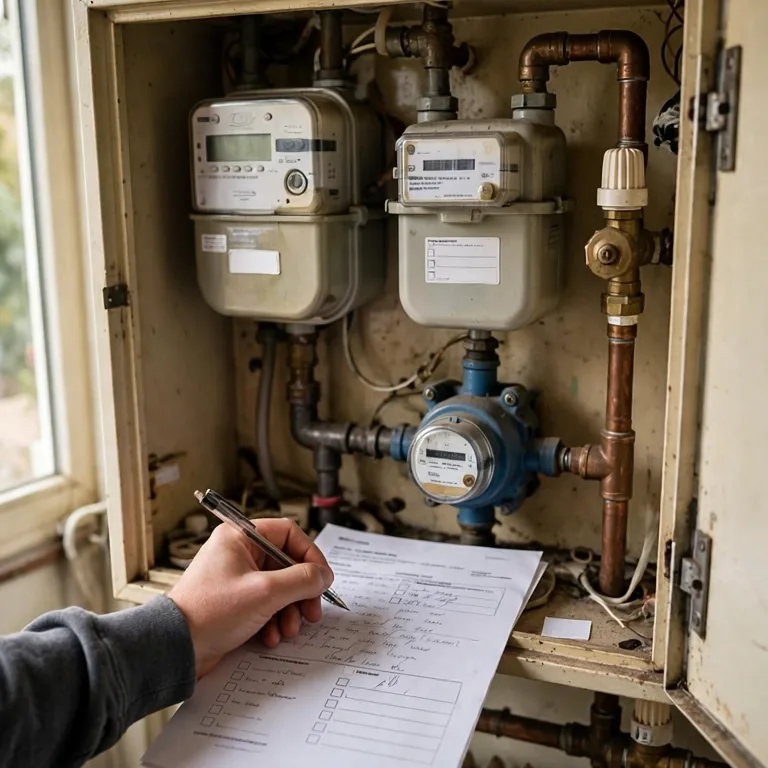
Look at your lease or purchase papers to see which utilities are included. If you must arrange energy yourself, either notify your supplier at least 2 weeks before the move or set up a new contract. From the day you receive the keys, register any water account with the regional company. Take photos of the meters on that day. If heating is shared, check who sends you the bill.
This guide is aimed at newcomers who are moving into a self-contained home. In some rooms and studios, energy or water is part of the rent or servicekosten (service costs). In that case, the landlord holds the contract. Before you sign, request a written breakdown. The Dutch rental-contract guide explains inclusive rent and service costs.
Find out what is included with the home
When electricity or gas is individual, you pick the supplier. The water company and the building’s heat supplier are determined by your address. To see which utilities you must arrange yourself, review your lease, service-cost statement or purchase documents.
Wide tables can be scrolled sideways.
| Utility | Who you arrange it with | What to confirm |
|---|---|---|
| Individual electricity or gas | A leverancier (energy supplier); you choose it | Start date, address, meter numbers and contract type |
| Drinking water | The regional drinkwaterbedrijf (drinking-water company); your address determines it | Registration date and when to give the meter reading |
| Heat bought directly | The heat supplier for the building; you cannot choose it | Contract, tariff, meter and start date |
| Heat through a landlord or owners’ association | The landlord or VvE (Vereniging van Eigenaars, owners’ association) | How use is measured and how costs are settled |
Before you order a gas contract, confirm whether the home uses gas. A home might be all-electric, use shared heating, or have some utilities covered by service costs. Look at the meters, lease and handover documents. If those records disagree, put your question in writing to the landlord, seller or building manager before you choose a contract.
Set up energy and water for key handover day
Use these steps so contract dates and meter readings line up with the days you get and return the keys.
-
- Review the lease or purchase documents, then make a list of the utilities you have to arrange yourself.
-
- Tell every current energy supplier about the move at least 2 weeks in advance. If you need a new supplier, set up a contract before the move.
-
- Request confirmation from the energy supplier of the date when supply will begin at the new address.
-
- From the day you receive the keys, register any water account with the regional company. Rijksoverheid (Dutch government): find your drinking-water company explains how the regional system works.
-
- When you get the keys, take photos of every electricity, gas, heat and water meter. If possible, write down each meter number and reading in the handover report.
-
- If the meter did not transmit readings automatically, send the energy readings to the supplier within 5 days.
-
- Provide water readings on the date the water company asks for them. Keep the photos and confirmations.
Warning
Comply with the date in a no-contract letter
Obey the deadline stated in the letter from your grid operator. For instance, Enexis Netbeheer (grid operator) provides a date by which supply has to start. Enexis may charge for energy used without a contract, for disconnection and for reconnection. Check that date with your supplier.
Reach out to the company that handles the problem
With individual electricity or gas, your supplier manages the contract and bills. The netbeheerder (grid operator) manages the local network and meter. Use the table to decide whom to contact.
You can move wide tables sideways by scrolling.
| Company | Main job | Contact it about |
|---|---|---|
| Energy supplier | Sells electricity or gas and sends the bill | Contract, move, price, readings, bill or payment plan |
| Grid operator | Owns the local cables, gas pipes, connection and meter | Outage, damaged connection, meter fault or reconnection |
| Drinking-water company | Supplies tap water in its region | Registration, water meter, water bill or leak before the meter |
| Heat supplier, landlord or VvE | Supplies heat or passes it on to residents | Heat contract, meter, outage or annual cost statement |
The energy supplier is your choice. The grid operator depends on your region. To find it, enter your postcode and house number in Mijnaansluiting.nl (grid-operator lookup). For normal household supply, network charges are collected by your energy supplier on your energy bill.
Compare energy contracts
A fixed contract may include an early-exit fee. Variable and dynamic contracts do not have a fixed-contract exit fee. ACM ConsuWijzer (consumer advice service of Autoriteit Consument & Markt, the Dutch markets regulator) shows how the rates change.
Wide tables can be scrolled sideways.
| Contract | How the rate changes | Exit rule |
|---|---|---|
| Vast (fixed) | The rate per kWh (kilowatt-hour) of electricity or m³ (cubic metre) of gas stays fixed for the agreed term | An early-exit fee may apply if the contract states the calculation and the supplier loses money |
| Variabel (variable) | The supplier may change the rate under the contract terms; many review it around January and July | No fixed-contract exit fee; notice is at most 1 month |
| Dynamisch (dynamic) | Electricity may change every quarter-hour, hour or day; gas changes daily. You need a slimme meter (smart meter). | No fixed-contract exit fee; future annual cost cannot be predicted |
Compare the estimated total yearly cost, including fixed charges and any charges for electricity that your solar panels feed into the grid. Check more than one comparison site and read the contract summary. Make sure the supplier holds an ACM licence.
Take advantage of the 14-day bedenktijd (cooling-off period)
If you agree to an energy contract online, by phone or away from the supplier’s business premises, a 14-day bedenktijd starts on the day you agree. You can cancel by letter or email during that period, with no reason and no exit fee. The supplier has to explain the cooling-off period and how to cancel.
When the required cancellation information is not provided, your cooling-off period can be extended by up to 12 months. If the supplier supplies the missing information within 12 months of the agreement, you then have 14 days from receiving it to cancel.
If you need supply while the cooling-off period is running, you must ask for it explicitly. If you cancel afterwards, you may still owe payment for energy already used. Before the day you get the keys, confirm the start date with the supplier.
Check if a phone offer requires written agreement
When a supplier phones you with a new contract offer, your written agreement is needed for the contract. Agreement on paper, by email or online counts. You do not need written agreement if you are the one calling the supplier, or for a renewal or a change to an existing contract.
Check the cost before you switch or cancel
An opzegvergoeding (early-termination fee) may apply if you end a fixed-term contract before it finishes. The contract must say what the fee is and how the supplier works it out. The fee covers the supplier’s expected loss. It is zero when the supplier’s current rate for a comparable contract for the remaining term is at least as high as your rate.
Before you decide, ask your supplier for an estimate. The final fee is based on the referentieproductaanbod (reference offer) price at the moment your supplier receives your cancellation or switching notice. After your supplier gives you the final fee, it remains fixed for 2 months.
Moving or emigrating does not automatically cancel the fee. The notice period is no more than 1 month. Your new supplier handles the switch.
Check monthly payments, yearly bills and meters
Make the monthly payment match actual use
A lot of households pay a termijnbedrag (monthly advance). In the jaarafrekening (annual settlement), the supplier compares those payments with actual use. If the advance is low, you may have a large amount left to pay later. If it is high, the supplier holds your money until settlement. After the first cold months, look at the usage data and change the advance so it fits your expected costs.
Check the final bill after a move or switch
Following a move or switch, the eindafrekening (final bill) has to arrive within 6 weeks. Compare it with your readings and the payments you have already made.
Choose a smart meter or a digital meter
On 1 January 2026, grid operators started replacing the remaining analog electricity and gas meters. For electricity meters, the appointment letter may arrive in 2026 or 2027. You are allowed to refuse a smart electricity or gas meter. If you do, you must accept a digital meter and report the readings yourself.
You can also ask the grid operator to turn off the communication function on a smart meter. If you have a digital meter or disabled communication, you must report your own readings for the annual settlement and whenever you switch suppliers.
Check who provides shared heating
Stadsverwarming (district heating) delivers heat through a local network. Blokverwarming (block heating) uses one shared heat source for a building or complex. The heat supplier is not something you can choose. Separately check whether you need your own electricity contract.
Your rights differ depending on whether you buy heat directly or get it through a landlord or VvE. Check which arrangement applies before you use the maximum prices below.
Wide tables can be scrolled sideways.
| How you receive heat | Which rules apply | What to check |
|---|---|---|
| You contract directly with a heat supplier | The Warmtewet (Heat Act) and ACM maximum prices apply to individual connections up to 100 kW (kilowatts) | Contract, connection size and tariff |
| Your landlord supplies the heat | The direct ACM caps do not apply to your bill; rental law applies | How use is measured, the service-cost statement and the annual settlement |
| Your VvE supplies the heat | The direct ACM caps do not apply to your bill; VvE rules apply | How use is measured, the annual statement and periodic contribution |
When your landlord supplies heat, you usually get an annual settlement. The exception is a fixed heat payment that does not change with use. If you have a dispute about rental heat costs, use Huurcommissie (Rent Tribunal): service-cost disputes to check the route for your tenancy.
Check the maximum heat prices for 2026
The 2026 maximum prices apply to direct customers within the 100 kW limit whose heat is ready for heating and hot tap water. Take the heat-use rate and multiply it by the number of GJ (gigajoules) you use, then add the fixed and measuring charges once a year. Tax is included in the prices.
Wide tables can be scrolled sideways.
| Charge | 2026 maximum |
|---|---|
| Heat used | €40.97 per GJ |
| Fixed charge: heat ready for heating and hot tap water | €615.66 per year |
| Measuring heat use | €33.73 per year |
Connections for heating only and for hot water only have different limits. Heat that needs further warming may also have different limits. To find your category, use ACM’s Warmtetarieven checker (heat-tariff checker).
For a home that receives heat ready for heating and hot tap water, 10 GJ costs €409.70 at the 2026 maximum rate. Add €615.66 and €33.73 for the two annual charges. The three charges come to €1,059.09 in total. Rental of an afleverset (heat delivery unit) and other applicable charges are extra, so this is not a complete bill estimate. Check your supplier’s tariff sheet.
A landlord or VvE gets tariff protection only when all three conditions are met. It must have its own contract with an outside heat supplier. It must pass the heat on to residents. Each resident’s individual connection must be no more than 100 kW. This caps what the supplier can charge the landlord or VvE. It does not directly cap each resident’s bill. See ACM’s heat-customer rights for an explanation of these arrangements.
Register for drinking water and check water-board taxes
The drinking-water company is determined by your address. From the day you get the keys, register any account you need. If the same company serves the old and new addresses, report the move and provide both readings when asked. If different companies serve them, close the old account and register with the new one. Keep the meter photos until both bills are final.
Drinking-water charges and local water taxes cover different services. The municipal sewer charge may be paid to the municipality or, in some places, through your water bill. Look at your bills to see which charges they contain. Some taxes may be combined on one assessment.
Wide tables can be scrolled sideways.
| Charge | Who sends it | What it pays for |
|---|---|---|
| Drinking-water bill | Regional drinking-water company | Tap-water supply and related charges |
| Waterschapsbelasting (water-board tax) | The regional waterschap (water board) or its tax office | Dikes, water levels, water quality and wastewater treatment |
| Rioolheffing (sewer charge) | The gemeente (municipality); in some places, the water company includes it on your water bill | The local sewer system |
municipal and water-board taxes guide explains who pays each tax and how to request kwijtschelding (a tax waiver). A low income may make you eligible for a waiver, but the authority also looks at your assets and necessary expenses.
Resolve common utility problems
Check for an outage before you assume disconnection
When you have no power, first look at the fuse box and see whether neighbours also have an outage. For a network or meter fault, contact the grid operator. If a no-contract letter arrived, contact an energy supplier and the grid operator on the same day. Meet the deadline in the letter and confirm when supply will begin. If energy is not included, you need your own contract; the previous resident’s contract covers their account.
Challenge incorrect readings with evidence
Compare the opening, annual or final bill against your dated meter photos. See whether the bill marks a reading as estimated. If a reading is incorrect, send the photo, meter number and handover date to the supplier. Request a corrected bill. Keep the original bill and the written reply.
Seek help before energy supply is disconnected
When you are unable to pay an energy bill, do the following:
-
- As soon as you realize you cannot pay, get in touch with the supplier and request a payment plan that is reasonable.
-
- Answer every reminder you receive.
-
- Submit an application to your gemeente for schuldhulpverlening (debt help).
-
- Give the supplier evidence that you have applied.
-
- Stick to any payment plan you have agreed to.
The supplier has to send no fewer than 3 reminders before it can end your contract because of non-payment. Every reminder must give you at least 14 days to make payment.
While any one of the following protections is in effect, the supplier is not allowed to end your contract because of unpaid bills:
- You are following an agreed payment plan.
- Your debt to this supplier was placed in a debt-help process on time, and that process has not ended.
- You submitted proof of your debt-help application on time and are waiting for the municipality to decide.
- A complaint you made about the bill or payment is going through the supplier’s complaints procedure.
- A dispute you have about the bill or payment is waiting for a decision from a dispute body that the supplier is part of.
- You have provided the supplier with a medical statement concerning you or someone who lives with you.
To get debt-help protection, you need to act within a reasonable period after a reminder. The supplier must give at least 4 weeks either for its debt to be placed in a debt-help process or for you to send proof that you applied.
The medical statement has to demonstrate that cutting off supply would lead to very serious health risks. The doctor who signs it cannot be treating the person who is at risk. The protection remains in place as long as that risk continues.
In addition, during the first 4 weeks after your details are shared with debt-help services, the supplier cannot stop supply because of unpaid bills. These protections relate to non-payment. Fraud or misuse is a different reason that can justify ending supply.
Follow the separate procedure for water debt
Prior to cutting off water because of non-payment, the company is required to send a written reminder and make an attempt to reach you in person. That reminder has to explain debt help and medical protection. It must offer, with your written consent, to pass your details to debt-help services. Once contact attempts have been made, the company must share those details if you did not respond to that offer. This rule about no response does not apply when you clearly refuse.
When cutting off the water would create very serious health risks for you or someone in your household, send a medical statement within a reasonable period. The doctor must not be treating the person who is at risk. This shields you from disconnection because of unpaid bills. Fraud or misuse on your part is a separate exception. An unsafe installation that makes disconnection necessary is also a separate exception.
If a disconnection over unpaid bills is planned, ask for water containers before the water is shut off. The containers have to hold at least 4 days’ worth of drinking water: no less than 3 litres for each person each day. You must be there before the disconnection so the company can fill them. Get in touch with your gemeente about debt help and about getting the supply restored.
Close or move each account
Do the following when you move out of a home:
-
- Notify every energy supplier you currently have about the move at least 2 weeks before it happens.
-
- Find out if your contract is able to cover both addresses while they overlap.
-
- Before you cancel, look into any exit fee for a fixed contract.
-
- Take photos of the meters on the final day.
-
- If the energy readings were not sent automatically, send them in within 5 days.
-
- Use the reading date set by the water company. When the same company serves both addresses, tell it about the move. When different companies serve them, close the old account and sign up with the new company.
Store confirmations, photos of the meters, and the first bills in one place.
When you are arranging a new home, use the arrival checklist below for registration, insurance, and banking.
Contracts for internet and mobile are not part of energy and water.
Continue reading these guides:
- First 90 days in the Netherlands: arrival checklist
- Phone and internet in the Netherlands
- Debt help in the Netherlands
Official Sources
- ACM ConsuWijzer: De netbeheerder voor elektriciteit en gas - who owns the network, which problems the grid operator handles and why households cannot choose that operator
- ACM ConsuWijzer: Tips bij het kiezen van een energieleverancier - how fixed, variable and dynamic contracts work, and what to compare before choosing a supplier
- ACM ConsuWijzer: Energiecontract opzeggen - when an early-termination fee may apply, how it is calculated and the maximum notice period
- ACM ConsuWijzer: Energiecontract vernietigen of annuleren - the 14-day cooling-off period and the written consent required for a telephone contract
- ACM ConsuWijzer: Energiecontract bij verhuizen - when to report a move, how to handle overlapping addresses and when to submit meter readings
- ACM ConsuWijzer: Termijnbedrag - how a monthly advance is estimated, changed and settled against actual annual use
- Enexis Netbeheer: Ik heb geen energiecontract - one grid operator's process when an address has no supply contract, including its letter, deadline and reconnection costs
- Rijksoverheid: Mag ik een slimme meter weigeren? - the 2026 replacement of analog meters and the choices between a smart meter, a digital meter and disabled communication
- Rijksoverheid: Kan ik een energieleverancier kiezen bij blokverwarming of stadsverwarming? - what district and block heating are and why residents cannot choose the heat supplier
- ACM ConsuWijzer: Maximale warmtetarieven - the 2026 maximum tariffs for customers who buy heat directly from a heat supplier
- ACM ConsuWijzer: Uw rechten bij stadsverwarming en blokverwarming - how rights differ for direct customers, tenants and members of an owners' association
- Rijksoverheid: Moet ik mijn verhuizing melden bij het drinkwaterbedrijf? - how to find the regional drinking-water company and report a move and water-meter readings
- Rijksoverheid: Taken van een waterschap - the separate water-management tasks and taxes of regional water boards
- Rijksoverheid: Hoe wordt de riolering en afvalwaterzuivering betaald? - why the municipal sewer charge and the water board's wastewater-treatment charge are separate
- Rijksoverheid: Mag mijn energieleverancier mij afsluiten als ik niet betaal? - the reminder, payment-plan, debt-help and health-risk protections before an energy contract may be ended
- Rijksoverheid: Mag mijn drinkwaterbedrijf mij afsluiten als ik niet betaal? - the separate water-debt procedure and the minimum emergency-water amount after disconnection
- ACM ConsuWijzer: De energierekening - Annual settlements, the six-week final-bill deadline after moving or switching, network charges on the supplier’s bill and complaints about incorrect bills.
- ACM ConsuWijzer: Schriftelijk akkoord bij telefonische koop - Written consent for new energy contracts offered by telephone, with exceptions for a call you initiate and contract renewal.
- Mijnaansluiting.nl: Wie zijn mijn netbeheerders? - The postcode and house-number lookup for the network operators serving an address.
- Rijksoverheid: Wat valt er onder de servicekosten van mijn huurwoning? - Utilities supplied through the landlord, separate household contracts and the distinction between basic rent and service costs.
- ACM ConsuWijzer: Vergoeding bij stroomstoring - Check the home’s own electrical installation, then check and report a network outage to the grid operator.
- Vitens: Schadeclaim indienen - A drinking-water company’s example of the boundary between its public supply network and home plumbing after the water meter.
- Rijksoverheid: Kwijtschelding van gemeentelijke belastingen - How a household can request a tax waiver; local decisions depend on income, assets and necessary expenses.
- Staatsblad (Official Bulletin) 2018, 311: Warmtewet amendment - Legal text behind the 100 kW scope, landlord and owners’ association exceptions, indirect tariff protection and heat measurement.
- Staatscourant (Government Gazette) 2025, 37730: Energieregeling (Energy Regulation) - Articles 2.22–2.23 distinguish an advance estimate from the final early-termination fee and set its two-month fixed period. Articles 2.43–2.46 cover reminders, payment plans, complaints, debt help and independent medical evidence before debt-based termination.
- Staatscourant 2012, 7964: Drinkwater disconnection rules - The reminder and contact procedure, independent medical evidence for very serious health risks and exceptions for customer fraud or misuse, or unsafe installations that require disconnection.
- Staatscourant 2018, 26271: Emergency water before disconnection - The right to request water-storage containers and fill them before disconnection, plus the amended debt-help data-sharing rule.
- Huurcommissie: service-cost disputes - Procedure for challenging an annual service-cost settlement: ask the landlord to correct it first, then check the Huurcommissie route and conditions for your tenancy sector and contract date.
- ACM ConsuWijzer: Aanbod op maat voor energie - A smart meter is required for a dynamic energy contract.
- RDI (Dutch digital-infrastructure regulator): Vervanging oude energiemeter - Electricity-meter replacement letters can arrive in 2026 or 2027.
- RDI: Kies uw nieuwe energiemeter - The choice of a digital or smart energy meter, self-reported readings and disabled communication.
- Staatsblad 2025, 12: Energiewet (Energy Act) - Article 3.53: small connections may refuse a communicating electricity or gas meter and receive a non-communicating meter.
- Staatsblad 2014, 140: Consumer rights - Civil Code articles 6:230o, 6:230s and 6:230v: cooling-off scope, up to twelve months’ extension for missing information, express requests for early supply and payment for energy already used.
- ACM ConsuWijzer: De slimme meter - Self-reported readings for the annual settlement and when switching suppliers, for digital meters or smart meters with communication disabled.
- ACM ConsuWijzer: Warmtetarieven checker (heat-tariff checker) - Find the applicable maximum heat-tariff category, including heat requiring further warming and any cold-supply tariff.
- Vitens: Rekeningen - The municipal sewer charge is collected through Vitens’ water bill in some municipalities.