
Your deposit is due within 14 days, or within 30 days when allowed deductions apply
After your tenancy ends, your landlord must give back your waarborgsom (rental deposit) within 14 days if there is no deduction. If deductions are permitted, the landlord must return the remaining balance within 30 days. The landlord must also provide a complete written itemisation of those deductions. Any damage charge must correspond to costs the landlord actually incurred. If the payment is late, send a written demand.
Begin before your move-out date
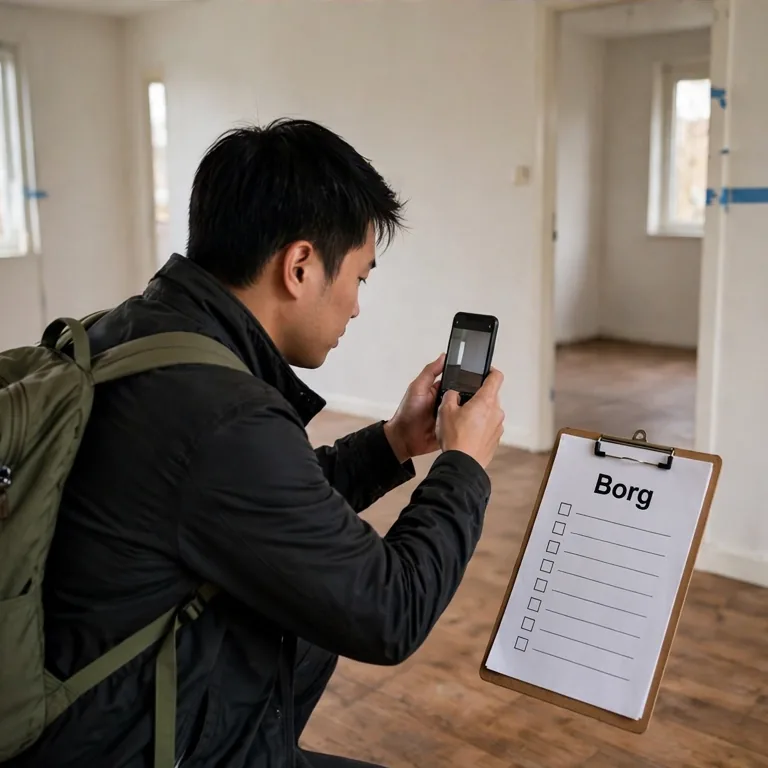
An inspection before you leave gives you time to correct points you have agreed on. Schedule one with your landlord. Keep photos, meter readings and written proof that the keys were returned.
Verify the maximum deposit and the date payment is due
The maximum deposit depends on the date you agreed the rental contract. It is based on your kale huur (basic rent), which does not include service costs or utilities.
Wide tables can be scrolled sideways.
| When the contract was agreed | Maximum deposit |
|---|---|
| On or after 1 July 2023 | Two months of basic rent |
| Before 1 July 2023 | Three months of basic rent under government guidance |
For instance, a new contract in 2026 with €900 basic rent per month permits a deposit of no more than €1,800. A higher total monthly payment does not raise that cap. Keep the bank transfer or signed receipt showing what you paid.
If a newer contract with a private landlord asked for more than two months of basic rent, your gemeente (municipality) can enforce the cap. When your landlord is a woningcorporatie (housing corporation), go through its complaints committee. The municipal reporting point can refer you to that committee. A claim for repayment may still need court action. The Wet goed verhuurderschap (Good Landlordship Act) rules for tenants explain the municipal reporting route.
The clock for returning the deposit starts on the date your tenancy legally ends. These deadlines are valid in October 2026. Neither an inspection nor the landlord’s paperwork changes the deadline.
Wide tables can be moved sideways by scrolling.
| Situation after the tenancy ends | Deadline | What the landlord must send |
|---|---|---|
| No permitted deduction | Within 14 days | The full deposit |
| One or more permitted deductions | Within 30 days | The balance and a full written cost breakdown |
Give back the keys in the agreed way and keep evidence. Suppose the landlord lawfully deducts €300 from a €1,800 deposit; then the remaining €1,500 must be paid within 30 days. A disagreement over €300 does not allow the landlord to keep the entire deposit.
Check every deduction
The landlord can take money from the deposit only for the four reasons set out below. Article 7:261b of the Burgerlijk Wetboek (Dutch Civil Code) establishes these limits:
- The real costs the landlord incurred to repair damage that is your responsibility.
- Rent that you still owe.
- Service costs that remain unpaid by you.
- An energieprestatievergoeding (energy performance fee) that is still owed by you.
For every deduction, ask what category it falls under and what evidence backs it. If the deduction is for damage, request the condition reports and a paid invoice or other proof of the actual cost. A quote by itself does not prove that the landlord incurred that cost. Separate fees for administration, drafting the contract or flat handling cannot be taken from the deposit. Allowed administration charges in a service-cost statement you have received may form part of service costs you still owe.
The landlord may deduct cleaning costs if you left the home dirty or did not meet the agreed condition for returning it. The amount charged must match costs the landlord actually incurred. A standard cleaning fee between tenants is not enough on its own. Costs from normal wear or from poor maintenance by the landlord cannot be deducted from your deposit.
Cleaning charges for moving in and moving out are not service costs. Cleaning of shared areas can be a service cost if it was agreed. The landlord must compare your advance payments against the actual yearly costs.
Any charge for repairing or replacing keys must be reasonable, backed by evidence and relate to a loss you are responsible for. If you lost keys or did not return them, ask for proof of the repair or replacement required and its actual cost. Ask why the whole lock had to be replaced instead of just a key. Sleutelgeld (key money) is different: it is an extra payment at entry that a landlord may not require.
Tell damage apart from normal wear
You may be liable for damage that results from not meeting your duties as a tenant. Decline caused by age or ordinary use cannot be deducted from your deposit. The landlord is liable for damage from poor or delayed maintenance. Major maintenance is the landlord’s job; daily cleaning and small repairs covered by the official tenant and landlord maintenance rules are yours.
Use these examples to test the reason given for a charge. A deduction for damage or cleaning still requires proof that you are responsible and proof of the cost actually incurred.
Wide tables can be scrolled sideways.
| Example | Starting point |
|---|---|
| Paint faded through ordinary use | Normal wear: no deposit deduction |
| Leak damage caused by overdue roof maintenance | Landlord maintenance: no deposit deduction |
| A worktop you burned during the tenancy | Possible tenant damage, with proof of responsibility and actual repair cost |
| A dirty oven left contrary to the agreed return condition | Possible actual cleaning cost; a fixed fee alone is insufficient |
If an item is old and worn, ask why replacement was necessary and how the charge was calculated. Compare the condition at move-in and move-out, the age, the repair needed and the cost actually incurred. Challenge each unsupported amount separately. Ask the landlord to pay the remaining balance by the deadline.
Compare the reports from move-in and move-out
An opnamestaat (condition report) records the home’s condition when you received it. Keep the signed move-in report. You must give the home back in the condition recorded there, apart from permitted changes and decline caused by age. Article 7:224 lays down this rule.
If there is no description, the law assumes you received the home in the condition it was in at the end of the tenancy, unless the landlord proves otherwise. Ask the landlord for evidence that any damage occurred during your tenancy.
If your tenancy started before 1 August 2003
The older evidence rule may apply: you can be presumed to have received the home in good condition. Ask a huurteam (local rental advice team) or a legal adviser how this rule affects your documents.
Gather evidence before you hand back the keys
Take these steps before and during the final inspection. Store all records together in one file:
- Set up an inspection with your landlord before you move out.
- Request a written list of work you still need to complete.
- Ask the landlord to put a date and signature on the pre-inspection report.
- Finish the agreed work before the final inspection.
- Document the condition with dated wide and close-up photos or video of each room, appliance and existing defect.
- Write down the gas, electricity and water meter readings.
- Be present at the final inspection.
- Put any disagreements in writing on the final report before you sign.
- Request that the landlord date and sign the final report.
- Return every key.
- Obtain dated written confirmation that the landlord received the keys.
- Email your IBAN (international bank account number), your new address and the tenancy end date.
Before you sign, make sure the report notes your disagreement and does not state that you accept a disputed charge. If you still disagree with the report, do not sign it and seek legal advice. Keep the move-in report, both inspection reports, repair receipts and messages together with your original photo and video files. If you dispute a cost, write that disagreement on the report or email it on the same day.
If the landlord did not make an inspection report
Before you return the keys, send your own dated photos, meter readings, key list and factual description. Keep proof that you sent them. The landlord still needs proof of the reason for a deduction and its actual amount.
Send a written demand once the deadline has passed
If the 14-day or 30-day payment date goes by without payment, the landlord can be in default: legally late with the payment. A separate notice of default may not be required because the law sets a fixed payment date. Still send a written demand to document your claim and give a final opportunity to pay.
Rijksoverheid (Dutch central government) recommends sending a written demand, then taking court action if payment still does not arrive. Prepare and send your demand in this order:
- Work out the balance: the deposit you paid minus any repayment and any deductions you accept.
- Write a demand that names the rented address, the contract parties, the tenancy end date and the exact balance you claim.
- In the demand, explain every deduction you dispute.
- Ask for a complete breakdown with proof of the actual cost.
- Provide your IBAN and a reasonable final deadline for payment.
- State that you reserve your right to statutory interest, costs and court action.
- Send the demand by email or by post.
- Retain a copy of the demand.
- If the landlord does not respond, send the demand by registered post.
- Keep the records showing that the registered post was sent and delivered.
You can use this wording as a starting point: 'On [date], my tenancy at [address] ended. The deposit I paid was €[amount]. The legal return period has expired. By [date], please pay €[balance] to [IBAN]. Also send a full cost breakdown with proof for every deduction. I reserve my right to statutory interest, costs, and court action.'
Het Juridisch Loket (legal advice service) provides a Dutch model letter. Use that model only when you returned the home without damage and owe no rent. You can send it from two weeks after the contract ends. If you dispute damage or unpaid rent, adjust your demand to those facts or ask for legal help.
You may claim wettelijke rente (statutory interest) while the landlord is in default. For non-commercial debts, the rate is 4% a year from 1 January 2026. Rates can change, so check the current statutory interest rate before you calculate your claim. The landlord holding the deposit during the tenancy does not by itself trigger statutory late-payment interest.
Decide who can deal with your problem
The route you take depends on what you need: enforcement of landlord rules, a decision about repayment, or advice. Reporting to one body does not replace making a claim to another.
Wide tables can be scrolled from side to side.
| Problem | Route | What it can do |
|---|---|---|
| Deposit above the cap or missing mandatory written deposit information | Private landlord: municipal good-landlordship reporting point. Housing corporation: its complaints committee. | Municipality: investigate and enforce the private landlord’s rules. Corporation: review the complaint; repayment may still require court. |
| Deposit not returned or disputed damage deduction | Kantonrechter (subdistrict judge), after a written demand | Order repayment and decide the money claim |
| Disputed annual service-cost statement | Huurcommissie (rent tribunal) service-cost information for tenants, where sector and contract-date rules allow | Assess service costs; cannot order deposit repayment |
| Help checking evidence or writing a claim | Huurteam, Het Juridisch Loket, legal-expenses insurer or legal adviser | Advise, negotiate or help prepare the next step |
The municipality may get a complaint saying a deposit was not returned. However, failing to return a deposit is not covered by the Wet goed verhuurderschap, which means the municipality has no power to order the money back. The Huurcommissie likewise states that a deposit claim can be decided only by a judge.
When service costs are involved, a Huurcommissie ruling is binding for social-sector tenants, and for middle-sector or free-sector tenants if their contract was agreed on or after 1 July 2024. If a free-sector contract was agreed before that date, the Huurcommissie can provide advice only when the contract permits it. See Huurcommissie service-cost information for tenants for your situation. While a service-cost case is ongoing, do not lose sight of the time limit for your deposit claim.
Get your court claim ready and check what it will cost
To bring a rental dispute to a final decision, you file it with the kantonrechter by means of a dagvaarding (summons). Using a lawyer is not required. The summons is served by a gerechtsdeurwaarder (court bailiff). Rechtspraak (Dutch judiciary) rental-dispute procedure describes how to begin the case.
Claim the remaining deposit, the statutory interest, and any costs that apply. Attach the documents you have for every category listed below:
- The rental contract and evidence that the deposit was paid.
- Check-in and check-out reports, photographs, and the receipt for the keys.
- The statement of deductions from the landlord and your written demand.
- A calculation, with a date, of the deposit balance and the interest.
The table below lists the 2026 griffierecht (court filing fee) amounts for one individual. To find the fee band, add together the deposit balance, any collection costs you claim that arose before the proceedings, and interest that accrued up to the moment the summons was served. The court registry sets the final fee.
Wide tables can be moved sideways by scrolling.
| Amount claimed | 2026 filing fee |
|---|---|
| Up to €500 | €93 |
| More than €500 up to €1,500 | €233 |
| More than €1,500 up to €12,500 | €265 |
| More than €12,500 | €753 |
Remember to include the bailiff and any advice in your budget.
When you are eligible for the low-income rate, the filing fee is €93. Include your toevoeging (legal aid grant) or inkomensverklaring (income statement) when you send the summons. If you have applied but the document has not arrived yet, enclose a copy of the application instead. Look at court filing fees and low-income requirements before you file.
The judge may require the party that loses to pay back part of the other party’s costs. Costs not covered by that order can still be yours to pay.
A collection agency is allowed to send payment demands. It has no power to seize the landlord’s assets. A bailiff can carry out repayment by seizure if there is a court judgment or another enforcement order. Compare any collection fee with the sum you are claiming. Seek advice before you add fixed collection charges to your demand.
Take action before the five-year time limit expires
As a rule, a contractual claim for payment is subject to a five-year time limit. That period begins at the start of the day following the day the payment was due. A clear written demand, or a written statement that clearly reserves your right to payment, can interrupt the time limit and begin a new period. Keep evidence that the landlord received it.
Which time-limit rules apply depends on the documents and dates in your situation. Obtain legal advice long before five years have gone by.
Resolve frequent deposit issues
If your plan is to apply the deposit to your last rent payment, first obtain the landlord’s written consent for that particular payment. If not, continue paying rent until the tenancy ends. Rent that is unpaid may be deducted from the deposit.
When the landlord holds back the entire deposit because one item is in dispute, request the remaining balance after allowed and proven deductions within 30 days. In your demand, state the disputed amount as a separate item.
If you paid an agency, or paid in cash, keep the receipt and write to both the landlord and the person or company that received the money. If the contract, the receipt, and the payment account name different parties, ask a huurteam or legal adviser who must repay. Before you pay another deposit, see rental scams guide.
Maintain a single file containing your timeline, contract, proof of payment, reports, original photos, key receipt, messages, and calculations. If the payment is still late after your written demand, seek help to prepare the court claim.
If you need help with your claim or with finding your next rental home, use these guides:
Official Sources
- Rijksoverheid: Rental deposit rules - The deposit cap, 14- and 30-day return periods, permitted deductions, cleaning costs, inspection advice and the demand-and-court route.
- Rijksoverheid: Extra costs when renting a home - The deposit cap for newer and older contracts, proof of payment, prohibited key money and disputed deductions.
- Rijksoverheid: Tenant and landlord maintenance costs - The division between tenant small repairs and cleaning duties and the landlord's major-maintenance duties.
- Volkshuisvesting Nederland (government housing information): Rental deposit - Return periods, normal wear, condition reports, burden of proof, the pre-August-2003 rule and dispute routes.
- Burgerlijk Wetboek: Book 7 - Articles 7:218, 7:224 and 7:261b on tenant damage, return condition, the deposit cap, repayment and demonstrably incurred deductions.
- Volkshuisvesting Nederland: Good Landlordship Act for tenants - What a municipality can enforce, including an excessive deposit or missing written information, and when repayment requires court action.
- Huurcommissie: Municipalities and deposit complaints - The distinction between municipal enforcement of an excessive deposit and a non-return dispute, which is outside the Good Landlordship Act.
- Huurcommissie: Complaints about landlord conduct - The Huurcommissie cannot order a landlord to return a deposit; that payment claim belongs at the court.
- Huurcommissie: Service-cost annual statement - Annual statements must compare advances with actual service costs, and access to a service-cost procedure depends on the rental sector and contract date.
- Huurcommissie: Other service costs - Shared-area cleaning, excluded move-in and move-out cleaning, and permitted administration charges for a supplied annual service-cost account.
- Rechtspraak: Ordinary procedure for a rental dispute - A final rental-dispute claim goes to the kantonrechter by summons, and a lawyer is optional.
- Rechtspraak: Court fees for kanton cases - The 2026 filing fees, low-income documents, the application-copy option when a document has not arrived, and possible partial reimbursement of costs.
- Rijksoverheid: Statutory interest - The statutory interest rate for non-commercial debts is 4% from 1 January 2026.
- Burgerlijk Wetboek: Book 6 - Articles 6:81 to 6:83 and 6:119 on default after a fixed payment date and statutory interest.
- Burgerlijk Wetboek: Book 3 - Articles 3:307 and 3:317 on the five-year limitation period and interruption by a clear written demand or reservation of rights.
- Rijksoverheid: Collection agency and bailiff powers - A collection agency cannot seize assets; a court bailiff can enforce a court judgment.
- Het Juridisch Loket: Model letter to reclaim a rental deposit - A Dutch model letter for tenants who returned the home without damage and owe no rent, usable from two weeks after the rental contract ends.
- Rijksoverheid: Court bailiff powers - A court bailiff needs a court judgment or an enforcement order before seizing assets.
- Volkshuisvesting Nederland: Enforcement and supervision - Housing-corporation complaints use the corporation’s complaints committee; the municipal reporting point can refer individual complaints there.
- Huurcommissie: Service-cost information for tenants - The tenant route for service-cost statements and disputes, including comparison of advance payments with actual costs.
- Rechtspraak: How civil court filing fees are calculated - The fee calculation counts the monetary claim, claimed pre-proceedings collection costs and interest up to service of the summons; the court registry determines the fee.
- Het Juridisch Loket: Returning your rental home - Inspection and repair-cost guidance: leave a disputed report unsigned, seek legal advice and check that repair charges are reasonable.